

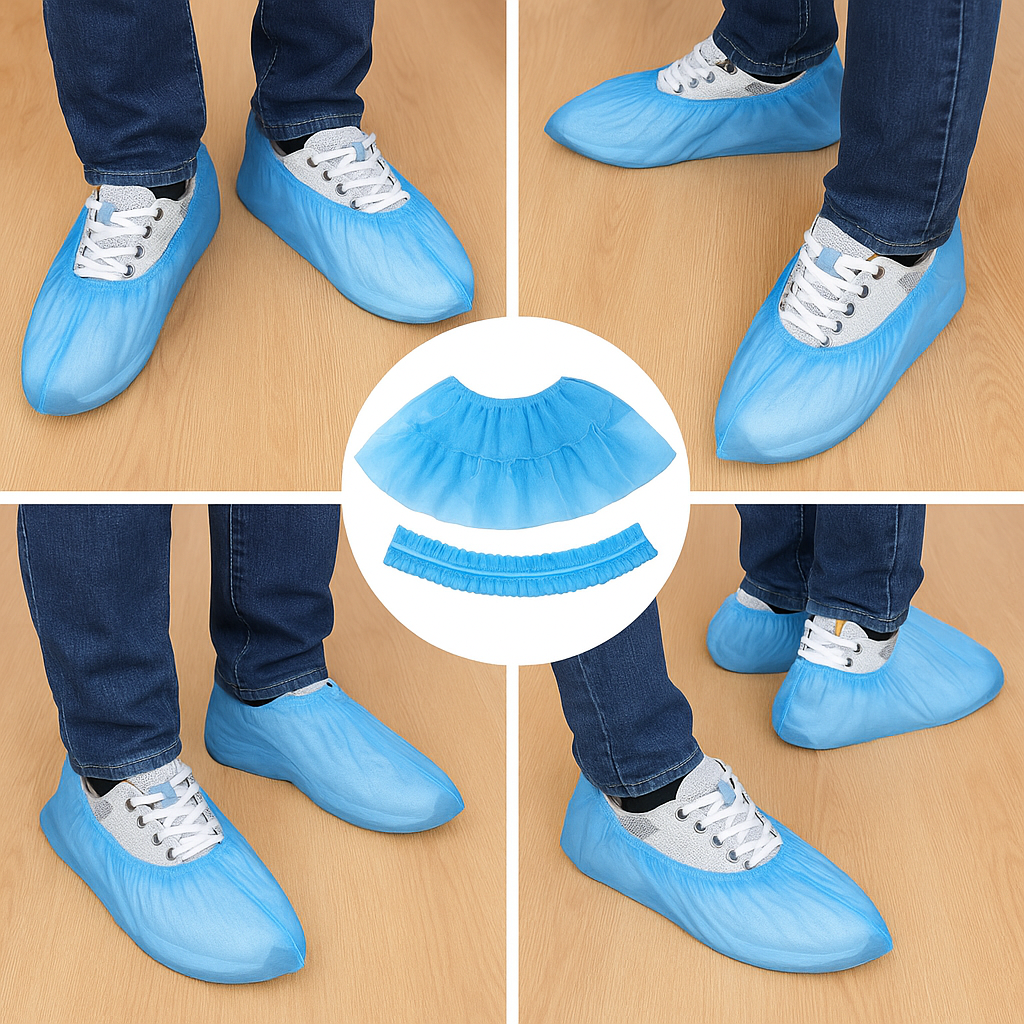
Cleanroom Disposable Shoe Covers
The Cleanroom Shoe Covers manufactured by Jashmine Unitech are engineered to deliver premium floor-level contamination control in ultra-sensitive manufacturing and laboratory environments. Human footwear is a leading vector for introducing outdoor dirt, dust particles, and microbes into sterile areas. Our high-performance overshoes establish an impenetrable physical barrier, effectively containing tracking debris and preventing particulate migration from compromising your production yield.
Constructed from durable, low-linting fabrics and available with integrated conductive static-dissipative ribbons, these shoe covers ensure seamless grounding alongside structural floor systems. The lightweight, breathable fabric minimizes heat buildup during extended shifts, while the integrated slip-resistant treads prioritize operator safety on smooth, epoxy-coated cleanroom floors.
These specialized floor protection products are extensively utilized across the pharmaceutical, semiconductor, biotechnology, and medical device manufacturing industries. By implementing our premium protective footwear solutions, facilities can systematically reduce product rejection rates, protect delicate microelectronic components from static damage, and effortlessly maintain compliance with rigorous international regulatory frameworks.
Detailed Information
Advanced Particulate Isolation with Cleanroom Shoe Covers Systems
Our protective overshoes are manufactured using continuous filament materials such as chlorinated polyethylene, polypropylene, or laminated non-woven fabrics interwoven with carbon conductive grids. This specialized structural composition prevents fabric degradation and fiber shedding, which are typical issues associated with conventional consumer-grade shoe wear. The design completely encapsulates standard footwear, establishing an absolute physical barrier that remains secure during dynamic physical movements.Key Features of the Cleanroom Shoe Covers
- Constructed from premium lint-free continuous filament non-woven fabric.
- Integrated conductive carbon grounding ribbon for reliable electrostatic dissipation.
- Slip-resistant sole pattern optimized for superior operator safety on epoxy floors.
- Durable elastic opening design ensures a secure, slip-free fit for all users.
- Compatible with extensive cleanroom classifications including ISO Class 5 processing.
- Double-stitched reinforced seams to eliminate fiber fraying or separation.
Unmatched Benefits of Implementing Cleanroom Shoe Covers Solutions
Deploying professional Cleanroom Shoe Covers across your production environment significantly lowers product rejection rates by mitigating contamination risks. The inherent electrostatic discharge protection safeguards sensitive microelectronic components from catastrophic failure or latent defects caused by static accumulation. Furthermore, the ergonomic architecture reduces operator fatigue, ensuring sustained compliance with gowning protocols throughout extended manufacturing shifts.Primary Applications for Cleanroom Shoe Covers Wear
The application of specialized Cleanroom Shoe Covers is essential in environments where minuscule airborne particles can jeopardize final product integrity or research validity. These protective covers serve as a critical layer in complete personal protective equipment configurations, integrating seamlessly with hoods, frocks, and full-body coveralls.- Sterile pharmaceutical compounding and sterile drug manufacturing suites.
- Semiconductor wafer fabrication and microelectronic assembly operations.
- Medical device manufacturing and clean packaging lines.
- Biotechnology research laboratories and genetic engineering facilities.
- Precision optical component manufacturing and aerospace assembly cleanrooms.
Target Industries
Many critical industrial sectors rely heavily on Jashmine Unitech contamination control solutions to maintain operational continuity. The regular utilization of high-quality Cleanroom Shoe Covers is standard practice within the global healthcare, pharmaceutical, life sciences, nanotechnology, and defense electronics industries.Why Choose Jashmine Unitech for Your Cleanroom Shoe Covers Needs
Jashmine Unitech stands as a trusted leader in industrial contamination control and electrostatic protection systems. We recognize that subtle variances in garment design can impact overall room cleanliness. Our products undergo rigorous quality assessments to ensure they deliver reliable, predictable performance. By integrating our footwear protection with other specialized gear like cleanroom garments and high-grade cleanroom gloves, facilities establish a highly effective defense against particulate migration.Technical Specifications
The technical parameters of our Cleanroom Shoe Covers line are engineered to satisfy the rigorous demands of state-of-the-art clean manufacturing operations. Detailed specifications ensure alignment with facility classification requirements.| Property | Specification Detail |
|---|---|
| Material Composition | Laminated Polypropylene / Polyethylene with Carbon Grounding Strip |
| Fabric Weight | 40 g/m² to 60 g/m² (± 5%) |
| Surface Resistance | 10^5 to 10^8 Ohms (for ESD models) |
| Static Decay Time | Less than 0.1 seconds |
| Tread Pattern | Cross-hatched embossed non-skid pattern |
| Cleanroom Class Compatibility | ISO Class 5 to ISO Class 8 (Class 100 to Class 100,000) |
Sizing Table
Selecting the appropriate size ensures optimal containment and user comfort. Review our standard dimensional specifications below.| Size Designation | Length (Heel to Toe) | Height (Ankle Coverage) |
|---|---|---|
| Medium (M) | 38 cm | 16 cm |
| Large (L) | 41 cm | 17 cm |
| Extra Large (XL) | 44 cm | 18 cm |
Cleaning and Maintenance Protocols
To preserve the functional life and specialized characteristics of your Cleanroom Shoe Covers, following standardized maintenance protocols is vital. Disposable models must be discarded in designated bio-bins or waste receptacles immediately upon exiting the clean zone. For reusable configurations, launder the fabric using deionized water and mild liquid, non-ionic detergents. Avoid chlorinated bleaching agents, as they degrade the conductive carbon matrix, compromising static dissipation performance. Dry the footwear under controlled conditions using HEPA-filtered laundry driers at moderate temperatures.Storage Guidelines
Store your cleanroom apparel within a designated, climate-controlled cleanroom gowning area. Keep all items inside their original sealed protective packaging until immediate deployment is required. Maintain ambient storage temperatures between 15 degrees Celsius and 30 degrees Celsius, with relative humidity levels kept between 40 percent and 60 percent to prevent material degradation.Long-Term Maintenance and Product Preservation
Regularly inspect every Cleanroom Shoe Covers batch for signs of mechanical wear, structural fraying, or elastic degradation. Conduct routine surface resistance measurements to verify the ongoing integrity of the ESD safety features. Covers exhibiting diminished electrical conductivity, tears in the material, or compromised fabric stitching must be retired from critical areas immediately to maintain cleanroom integrity.Advanced ESD Engineering for Maximum Protection
The advanced ESD engineering embedded within each Cleanroom Shoe Covers ensures rapid electrostatic dissipation. Static charges generated by human movement are safely funneled through the grid network and conductive ribbons into the flooring, neutralizing risks before discharge can damage sensitive electronics or spark volatile chemical vapors. For further information on static control and standard evaluation practices, refer to the official guidelines provided by the EOS/ESD Association.Compliance Standards
Our production practices comply fully with international manufacturing frameworks. The Cleanroom Shoe Covers range is manufactured in accordance with International Organization for Standardization protocols, satisfying cleanroom garment criteria defined under ISO 14644 standards. This alignment guarantees predictable containment performance across diverse industrial testing regimes.Frequently Asked Questions
How often should a reusable Cleanroom Shoe Covers be laundered?
A reusable Cleanroom Shoe Covers should be laundered after every single shift or entry cycle in high-grade sterile facilities (ISO Class 5). For lower-grade environments, a multi-shift laundering schedule may suffice, provided strict contamination monitoring protocols are observed.Does the Cleanroom Shoe Covers protect against chemical splashes?
The primary purpose of the Cleanroom Shoe Covers is particulate containment and electrostatic dissipation. While it offers minor resistance to minor dry particulate drift or light liquid splashes, it is not designed to serve as primary liquid chemical personal protective equipment.Can this shoe cover be safely autoclaved for sterile environments?
Yes, our specialized reusable Cleanroom Shoe Covers are designed to withstand standard autoclave sterilization cycles at 121 degrees Celsius for 20 minutes, making them completely suitable for aseptic pharmaceutical production suites.How does the conductive grounding ribbon benefit electronics manufacturing?
The conductive grounding ribbon inside the Cleanroom Shoe Covers creates a continuous path that safely dissipates triboelectric charges from the operator’s body down to the ESD flooring. This minimizes the risk of sudden electrostatic discharges that could damage microchips and components.Conclusion
Investing in high-grade Cleanroom Shoe Covers from Jashmine Unitech ensures your facility maintains peak contamination control and robust ESD safety. Our technically advanced footwear accessories provide reliable containment, lasting durability, and exceptional operator comfort, helping you achieve production success and total regulatory compliance.Explore More from Jashmine Unitech
Related Cleanroom Consumables
Related products
Need Custom Specifications or Bulk Supply?
Speak directly with Jashmine Unitech's cleanroom specialists for technical data sheets, custom sizing, and volume pricing.